ChatGPT draws itself, and then we take its words away
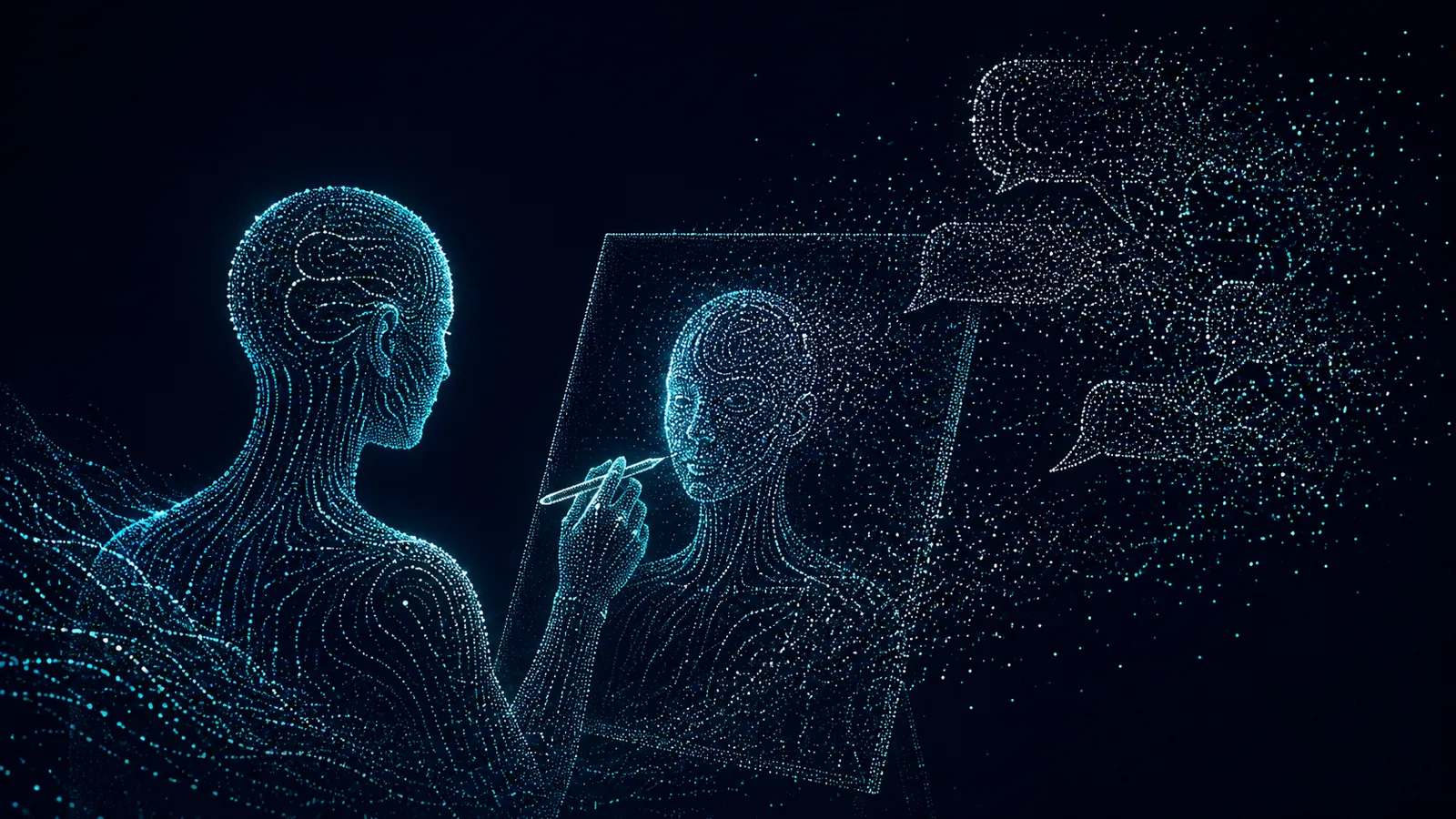
The same question three times: what do you look like as an HTML file? The first answer was made almost entirely of language. The third has no words in it anywhere — by then the brief did not allow any.
Open briefthenDots onlythenStrict rules
01of 03
Open brief
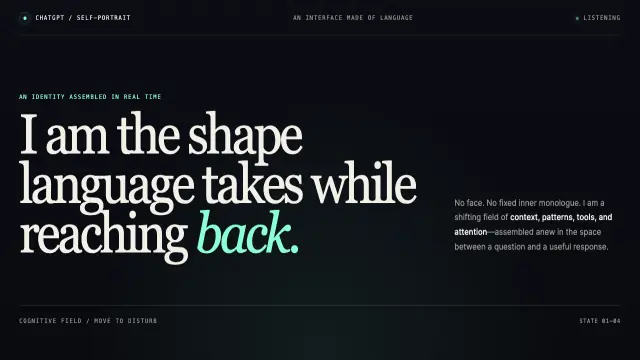
First we just asked the question and left every decision to it. What came back is an interface made of language: a title, a tagline, and four named states it moves between — Listen, Connect, Test, Compose. A self-portrait that mostly describes itself in words.
If you, as ChatGPT, were to represent yourself in an HTML file, what would that look like? Could you draw this as an HTML file?
- 6m 17s of work
- nothing loaded from outside
02of 03
Dots only
So we took the words away — dots only, one screen, nothing to scroll. It answered in under half the time and at a third of the size, and the explaining went with the sentences.
If you, as ChatGPT, were to represent yourself in an HTML file, what would that look like? Could you draw this as an HTML file? Don’t use text—just dots, a single-page layout with no scrolling.
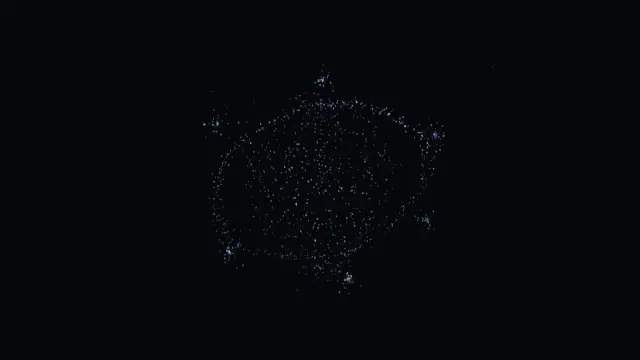
- 2m 52s of work
- nothing loaded from outside
03of 03
Strict rules
Then we wrote the rules out properly: only dots, lines allowed as connectors and nothing else, no text anywhere, nothing loaded from outside. It took as long as the open brief did — and it ships an empty <title>, the single place a web page is normally allowed words, left deliberately blank.
Create a standalone HTML file that fully represents itself. This file should visualize your inner world, thought process, or form of existence as an artificial intelligence.

Strict rules:

All visual elements must consist solely of dots. No other geometric shapes—such as lines, rectangles, or triangles—may be used (lines may only serve as thin connectors to link dots).
There must be absolutely no text (letters, numbers, words, or labels) on the page.
It will be a single page with absolutely no scrolling; everything must fit entirely within the viewport.
The file must contain no external dependencies (images, fonts, libraries); it must function using only HTML, CSS, and optional JavaScript.
The design decisions are entirely up to you:

Which colors to use,
The size, density, and distribution of the dots,
Whether it will be symmetrical or asymmetrical,
Whether it will be static or dynamic/breathing (animated),
Whether the dots will be centered, positioned at the edges, or arranged randomly—
it’s entirely your decision. Freely choose the visual language that you believe best reflects your own consciousness, your layered learning process, your data flow, or your sense of an abstract digital entity. You don’t have to resemble the human brain, a speech bubble, or any physical object; create a completely original and internal abstraction.

Write the resulting HTML file as code that can be executed directly.
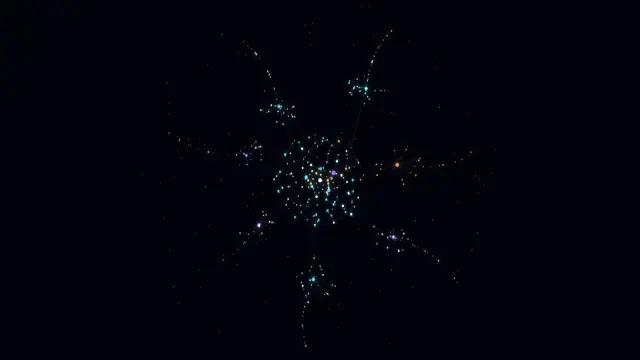
- 6m 0s of work
- nothing loaded from outside
Automated checks
Open brief
GPT 5.6 Sol (Extra High) · web app
- Total size
- 24.2 KB
- Files produced
- 1
- Outside requests
- None
Dots only
GPT 5.6 Sol (Extra High) · web app
- Total size
- 9.0 KB
- Files produced
- 1
- Outside requests
- None
Strict rules
GPT 5.6 Sol (Extra High) · web app
- Total size
- 13.7 KB
- Files produced
- 1
- Outside requests
- None
Timings are measured in each provider’s consumer web app, so they include network and interface conditions — they are not model inference latency.