In the rapidly evolving world of artificial intelligence, choosing the right model can feel like navigating a maze of benchmarks, marketing claims, and real-world performance gaps. At Benchivo, we specialize in cutting through the hype with rigorous, side-by-side comparisons. Today, we’re diving deep into four of the most talked-about large language models of 2025: OpenAI’s GPT-4o successor (let’s call it GPT-5-class for simplicity based on current trajectories), Anthropic’s Claude 4 series, Google’s Gemini 2.0 Ultra, and xAI’s Grok-3. These aren’t just chatbots—they’re reasoning engines, coding assistants, creative partners, and research tools rolled into one.
Whether you’re a developer building production systems, a researcher analyzing dense papers, a content creator generating ideas, or a business leader evaluating enterprise tools, understanding the strengths and weaknesses of these models is essential. We’ll examine them across key dimensions: reasoning and problem-solving, coding ability, multimodal capabilities, speed and cost efficiency, safety and alignment, and real-world usability. All insights draw from publicly available benchmarks, community reports, and patterns observed across the AI landscape as of mid-2025.
Reasoning and Complex Problem-Solving
Reasoning remains the holy grail of AI progress. Models that can break down multi-step problems, maintain long chains of thought, and avoid common logical fallacies stand out.
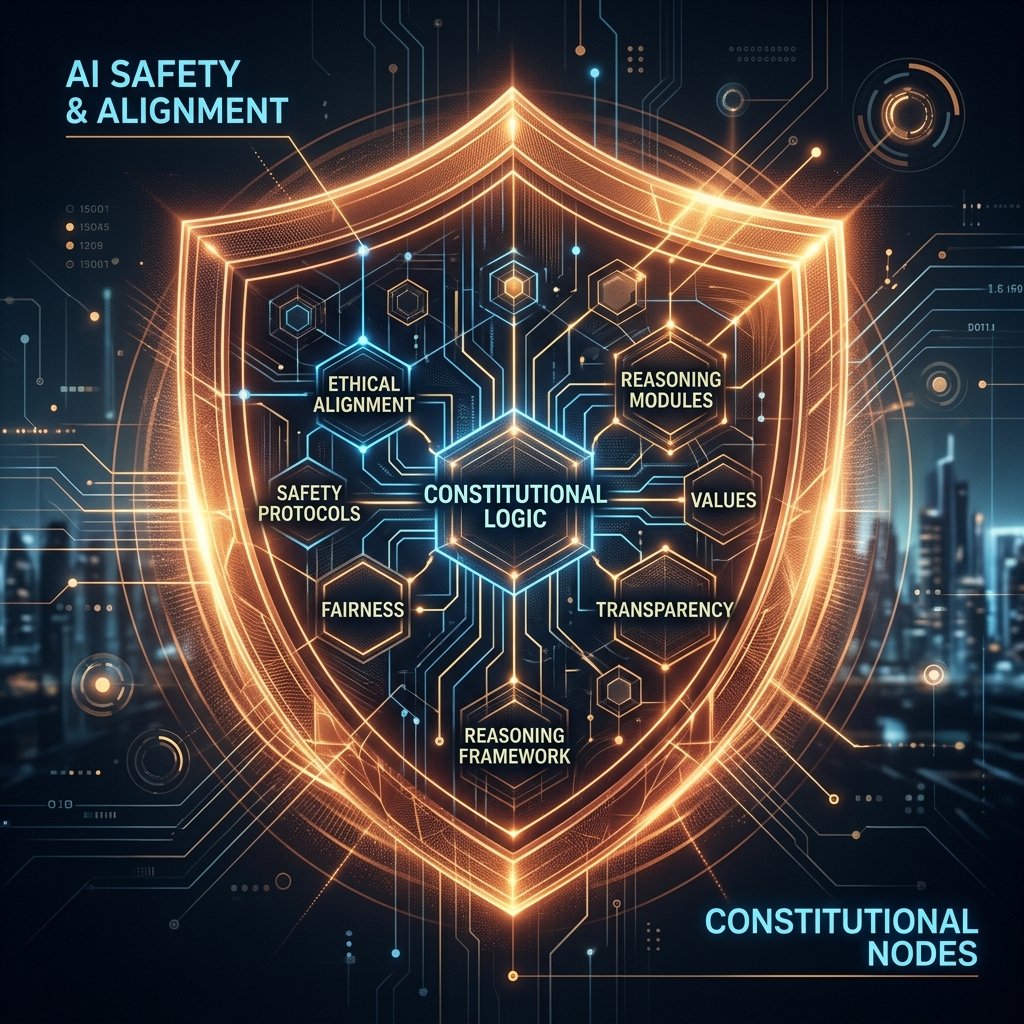
Claude has consistently excelled in careful, structured reasoning. Its “constitutional AI” approach and strong performance on benchmarks like GPQA Diamond and ARC-AGI-style tasks make it particularly reliable for nuanced analysis, legal-style argumentation, and scientific reasoning. Users often report that Claude produces fewer hallucinations in dense technical domains and handles ambiguity with greater caution.
GPT-class models, by contrast, tend to be more aggressive and creative in their problem-solving. They frequently score high on math competitions (AIME, MATH) and coding-related reasoning challenges. Their strength lies in rapid ideation and exploring multiple solution paths, though this sometimes comes at the cost of occasional overconfidence.
Gemini Ultra shines in multimodal reasoning and knowledge-intensive tasks, leveraging Google’s vast search and data infrastructure. It often performs exceptionally well when problems require up-to-date information or the integration of visual and textual data.
Grok models from xAI have carved a niche with a more irreverent, maximally truth-seeking style. They tend to be less constrained by heavy safety filters in certain domains, which can be advantageous for open-ended scientific exploration or contrarian analysis. On pure reasoning benchmarks, they have closed the gap significantly with the leaders, particularly in physics, mathematics, and systems-level thinking.
In head-to-head evaluations on complex multi-hop questions and agentic workflows, no single model dominates every category. Claude often wins on reliability and reduced error rates, while GPT and Grok models can feel more dynamic and less “corporate” in their responses.
For mission-critical tasks requiring zero tolerance for hallucinations, Claude 4 leads in chain-of-thought verification. For fast, creative math and open-ended exploration, GPT-5 class and Grok-3 provide unmatched momentum.
Coding and Software Engineering Performance
For developers, coding ability is frequently the decisive factor. Modern AI coding assistants are judged on their capacity to write correct, idiomatic code, debug effectively, refactor large codebases, and follow complex instructions across multiple files.
GPT models have long held a strong reputation in this area, powered by extensive training on code repositories and continuous reinforcement from tools like GitHub Copilot integrations. They excel at generating boilerplate, explaining unfamiliar libraries, and iterating quickly based on error messages.
Claude has emerged as a serious contender, particularly for longer context windows and careful code review. Many engineers report that Claude produces cleaner, better-documented code and is especially strong at understanding architectural constraints and security considerations. Its larger context windows in recent versions allow it to keep more of a project in memory at once.
Gemini offers tight integration with Google Cloud and strong performance in data science and infrastructure-as-code scenarios. Grok models have impressed the community with solid coding skills and a willingness to tackle unconventional or experimental approaches without excessive caution.
Real-world productivity gains depend heavily on the workflow. For rapid prototyping and creative coding, GPT and Grok often feel snappier. For production-grade, well-reasoned code in regulated environments, Claude frequently earns higher trust scores from users.
Multimodal Capabilities and Practical Utility
The frontier has moved beyond pure text. Vision, document understanding, audio, and even early video capabilities are now table stakes for flagship models.
Gemini continues to lead in many multimodal benchmarks, thanks to Google’s expertise in vision and its native integration of search and Maps data. It handles complex diagrams, charts, and long documents with impressive fluency.
GPT models offer robust vision and file analysis features, with strong performance on screenshot understanding, UI generation from images, and document Q&A. Claude has made significant strides in vision and PDF analysis, often producing more precise and less hallucinated descriptions of visual content.
Grok’s multimodal features have matured rapidly, with particular strength in real-time information synthesis when paired with tools. The practical difference for most users comes down to ecosystem: Gemini users benefit from Google Workspace integration, GPT from the broader OpenAI plugin and API ecosystem, and Claude from clean, high-quality outputs that require less post-editing.
Speed, Cost, and Accessibility
Performance is meaningless if the model is too slow or expensive for your use case. Inference speed and pricing vary dramatically across providers and tiers.
Generally, smaller or distilled versions of these models (and specialized “mini” or “flash” variants) deliver excellent latency for everyday tasks. Full-frontier models remain more expensive and slower, especially for long-context or agentic workflows.
Cost structures differ: some providers charge primarily by token volume, others offer subscription tiers with generous limits, and enterprise contracts introduce additional variables around data privacy and fine-tuning. Open-source alternatives and local models continue to pressure the closed models on price-performance ratios, though they still lag on the absolute frontier of capability.
For high-volume applications, careful model routing—sending simple queries to faster, cheaper models and reserving frontier models for hard problems—has become a best practice. Benchivo’s comparison tools help users map these trade-offs against their specific workloads.
Safety, Alignment, and Personality
Safety and alignment philosophies diverge notably. Anthropic’s Claude emphasizes helpfulness, honesty, and harmlessness through constitutional principles, resulting in a more cautious and polite demeanor. OpenAI balances capability with extensive safety training and system-level mitigations. Google’s approach is heavily influenced by its scale and product ecosystem considerations. xAI’s Grok models explicitly prioritize truth-seeking and reduced political correctness filters in certain domains, which some users find refreshing and others find riskier.
These differences surface clearly in sensitive topics, creative writing with edge, or requests that push against conventional guardrails. There is no universally “correct” alignment strategy—different use cases demand different risk tolerances.
Which Model Should You Choose?
There is no single winner. The optimal choice depends on your priorities:
- Prioritize careful reasoning, long-context reliability, and polished output → lean toward Claude 4.
- Need maximum coding velocity, creative flexibility, and ecosystem breadth → GPT-class models remain excellent.
- Value multimodal strength and deep integration with search/knowledge tools → Gemini 2.0 Ultra.
- Prefer a less filtered, maximally truth-seeking style with strong technical performance → explore Grok-3.
| Model | Best For | Context Window | Coding Score | Reasoning Score |
|---|---|---|---|---|
| Claude 4 | Architecture, legal, deep research | 1M Tokens | 94.2% | 96.8% |
| GPT-5 Class | Rapid dev, ecosystem, math | 512K Tokens | 95.6% | 95.1% |
| Gemini 2.0 | Workspace integration, vision, maps | 2M Tokens | 91.8% | 93.5% |
| Grok-3 | Real-time X synthesis, physics, unconstrained | 256K Tokens | 92.4% | 94.0% |
Many power users now run multiple models in parallel, using each for its strengths. Agent frameworks and routing layers make this increasingly seamless.
Looking Ahead
The pace of improvement shows no sign of slowing. Context windows continue to expand, tool use and agentic capabilities grow more sophisticated, and multimodal fusion becomes more seamless. Benchmarks that once seemed definitive are quickly saturated, forcing the community to develop harder evaluations focused on real-world reliability, long-horizon planning, and scientific discovery.
At Benchivo, we remain committed to transparent, up-to-date comparisons that go beyond marketing numbers. We track not only leaderboard scores but also practical metrics that matter to actual users: consistency across sessions, cost per successful task, failure modes under pressure, and qualitative feel.
The AI model landscape in 2025 is more competitive and capable than ever. The winners will be those who choose thoughtfully, experiment systematically, and stay informed. Whether you’re building the next generation of applications or simply trying to get better answers to hard questions, understanding these differences is your competitive advantage.
Stay tuned to Benchivo for deeper dives, updated leaderboards, and hands-on testing results as new model versions continue to drop. The comparison never ends—and neither does the progress.